Own product · alema.io
VisualContext: memory that shows up at the right moment
Who they are, where you know each other from and what you agreed. A memory app for Android phones and smart glasses, designed and built by a designer with AI, now in private beta.
- Role
- Founder and product designer, with AI as engineering partner
- Period
- 2026
- Sector
- Wearables and AI

Pain points
- The name is gone two seconds after you hear it.
- What was agreed over coffee is lost by the next week.
- AI assistants answer, but they do not remember who you met.
Discovery
- 01Daily useEvery version tested on my phone and on Rokid Glasses, in real meetings.
- 02Rokid communityTalks with people who already use smart glasses, and feature requests.
- 03BenchmarkGemini, the Rokid Nexus assistant and meeting note-takers, to decide what not to rebuild.
- 04AccessibilityVoice-only mode and captions designed with people who cannot see or hear.
Journey
- 01EncounterThe camera sees the person and the conversation starts.
- 02Card on the spotWho they are, where you know each other from and the last topic.
- 03Memory builds itselfThe conversation becomes text, with the place and what was agreed.
- 04Ask later"What did I agree with Carla?" The answer shows on the screen or the lens.
- 05ManagerWhenever you want, review and correct calmly.
What changed
- Private beta on Android phones, with or without glasses.
- Faces, encounters, places, music, QR and captions in one app.
- Privacy explained on the site in plain, technical language.
The problem
Forgetting a name two seconds after hearing it, or what was agreed over coffee, is common. It happens more with ADHD, fatigue or age.
AI assistants answer questions, but they do not keep who you met or what was said.
Design decisions
One card, right then: who they are, where you know each other from and a summary of your last meeting. Nothing else competes with the face.
On the lens, only green on black, at most 70% of the width, so it never blocks the view.
Places and music only when you ask. Where you met is kept on its own, with no pins on screen.
Three ways to use it: type, talk and voice only, the last one designed for people who cannot see.

The Manager, for later
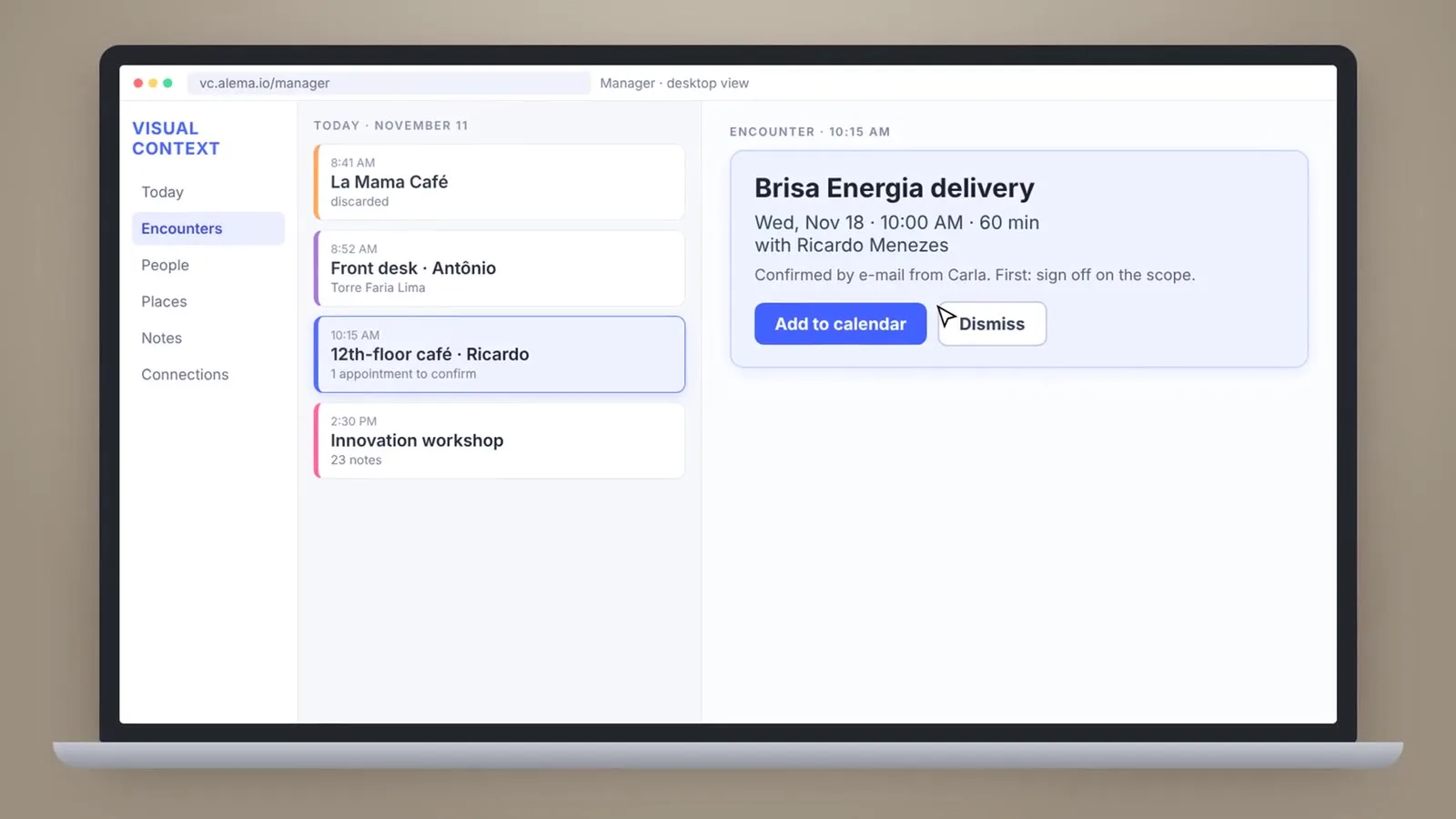
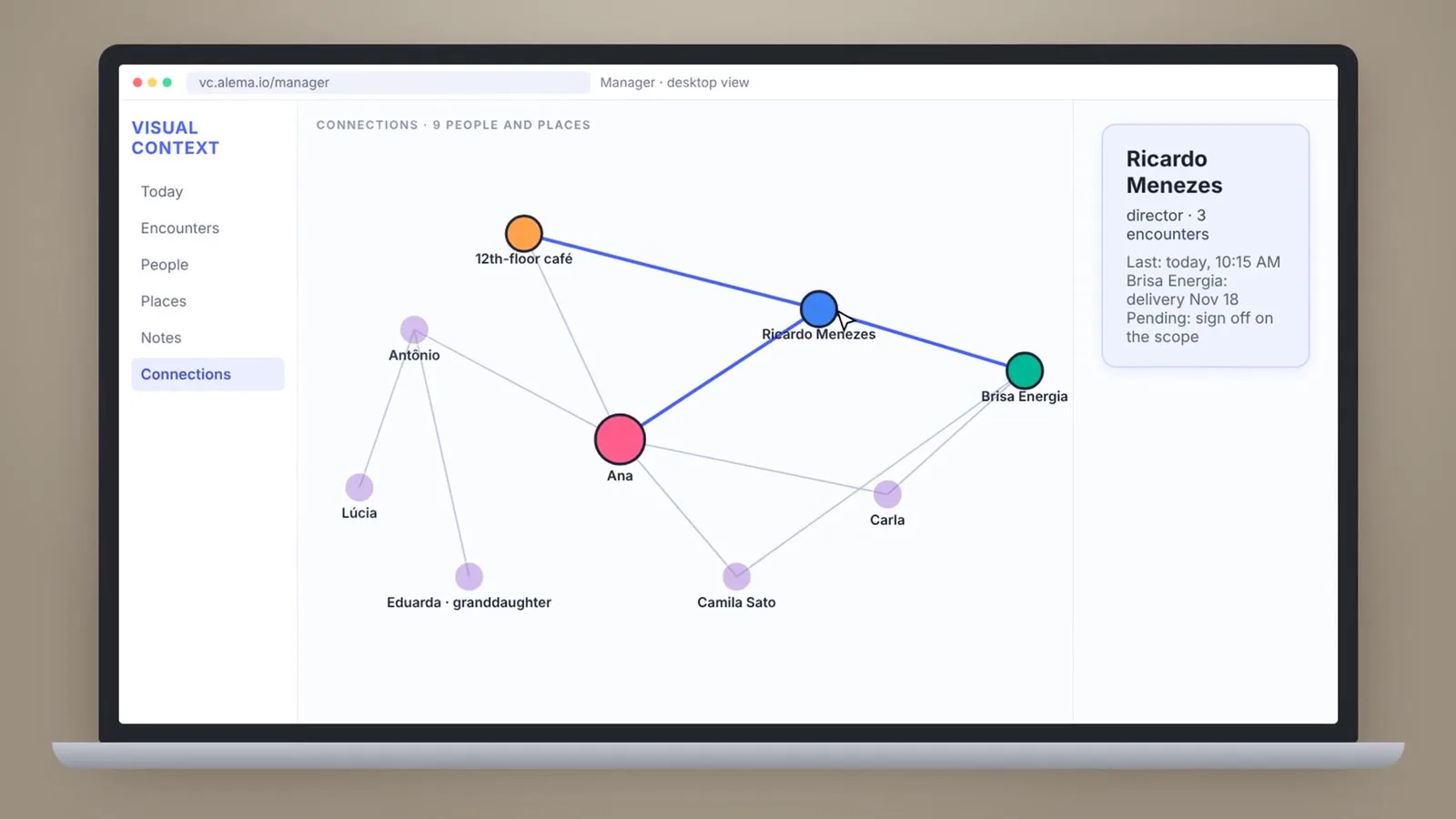
An optional web page to review, correct and explore the memory calmly: encounters, a web of people and places, and calendar and note suggestions.
How it was built
I define the problem, design and decide. AI researches and writes the code. Every version is tested on my phone and on Rokid Glasses before it reaches anyone.
Gemini is the voice and vision engine. VisualContext is the memory around it.
Where it stands
In private beta on Android. The test exists to answer one question: can this memory be kept for years?
Want something similar?
Describe the problem. alema.io replies with a path, not a generic quote.